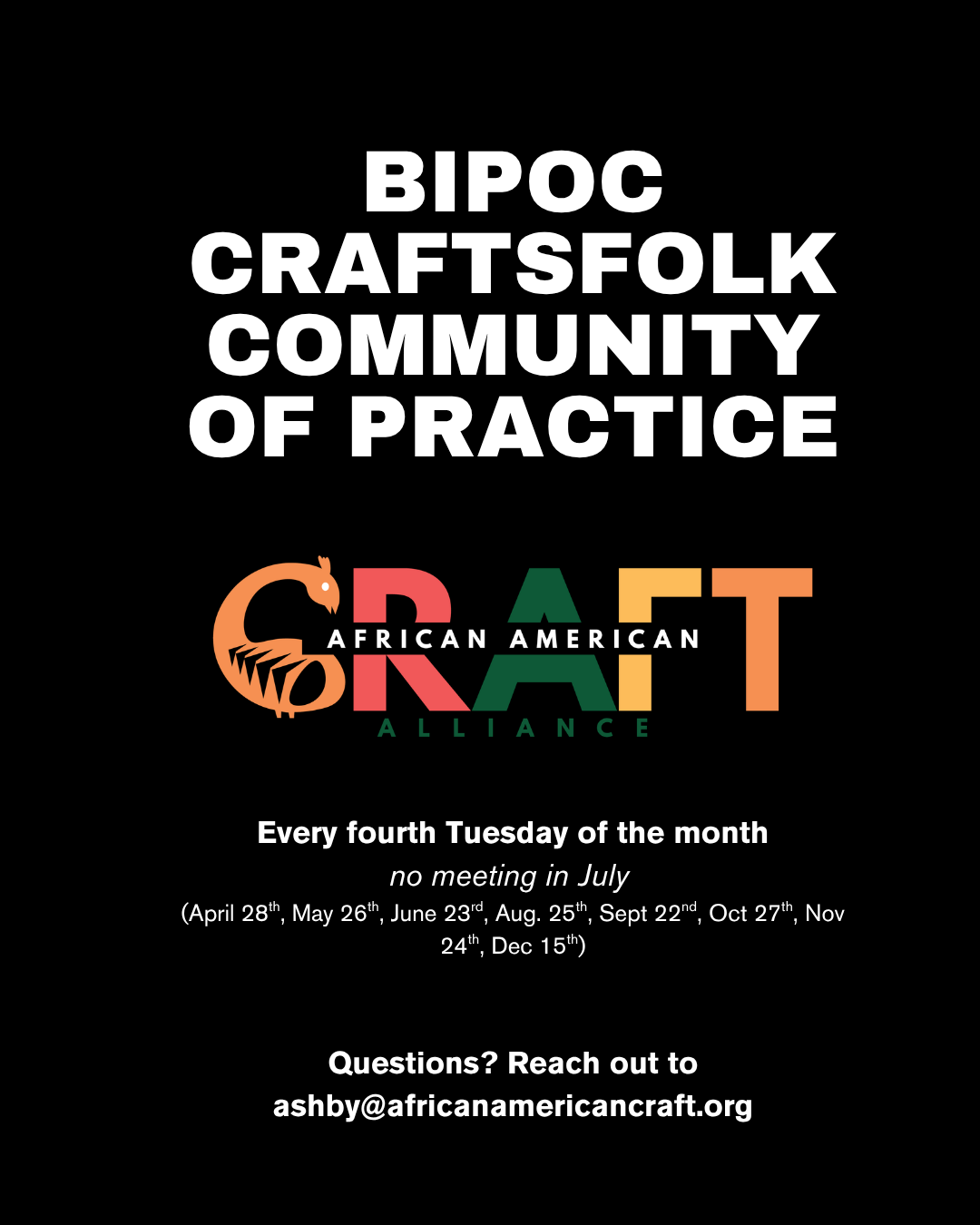
A virtual gathering space for BIPOC craftsfolk, artists, arts educators and members of the African American Craft Alliance. Attendees are invited to come together and discuss their practices, exchange resources, and widen their networks of AACA practitioners.
Your understanding and support in ensuring this program remains dedicated to its intended demographic community is greatly appreciated.
Community of Practice meetings are sponsored by the Folk Education Association of America and occur every month on the 4th Tuesday with the exception of July and December. There will be no meeting in July and the December meeting will occur on the 3rd Tuesday.
Please note your correct time zone for the meeting:
5 pm Eastern / 4 pm Central / 3 pm Mountain / 2 pm Pacific / 1 pm Alaska
A virtual gathering space for BIPOC craftsfolk, artists, arts educators and members of the African American Craft Alliance. Attendees are invited to come together and discuss their practices, exchange resources, and widen their networks of AACA practitioners.
Your understanding and support in ensuring this program remains dedicated to its intended demographic community is greatly appreciated.
Community of Practice meetings are sponsored by the Folk Education Association of America and occur every month on the 4th Tuesday with the exception of July and December. There will be no meeting in July and the December meeting will occur on the 3rd Tuesday.
Please note your correct time zone for the meeting:
5 pm Eastern / 4 pm Central / 3 pm Mountain / 2 pm Pacific / 1 pm Alaska
A virtual gathering space for BIPOC craftsfolk, artists, arts educators and members of the African American Craft Alliance. Attendees are invited to come together and discuss their practices, exchange resources, and widen their networks of AACA practitioners.
Your understanding and support in ensuring this program remains dedicated to its intended demographic community is greatly appreciated.
Community of Practice meetings are sponsored by the Folk Education Association of America and occur every month on the 4th Tuesday with the exception of July and December. There will be no meeting in July and the December meeting will occur on the 3rd Tuesday.
Please note your correct time zone for the meeting:
5 pm Eastern / 4 pm Central / 3 pm Mountain / 2 pm Pacific / 1 pm Alaska
No results match your search. Try removing a few filters.
